Children's Cold Medicines: Read the Ingredients Before the Brand
Learn how age restrictions and overlapping ingredients affect children's cough and cold medicines, and what to ask before giving another product.
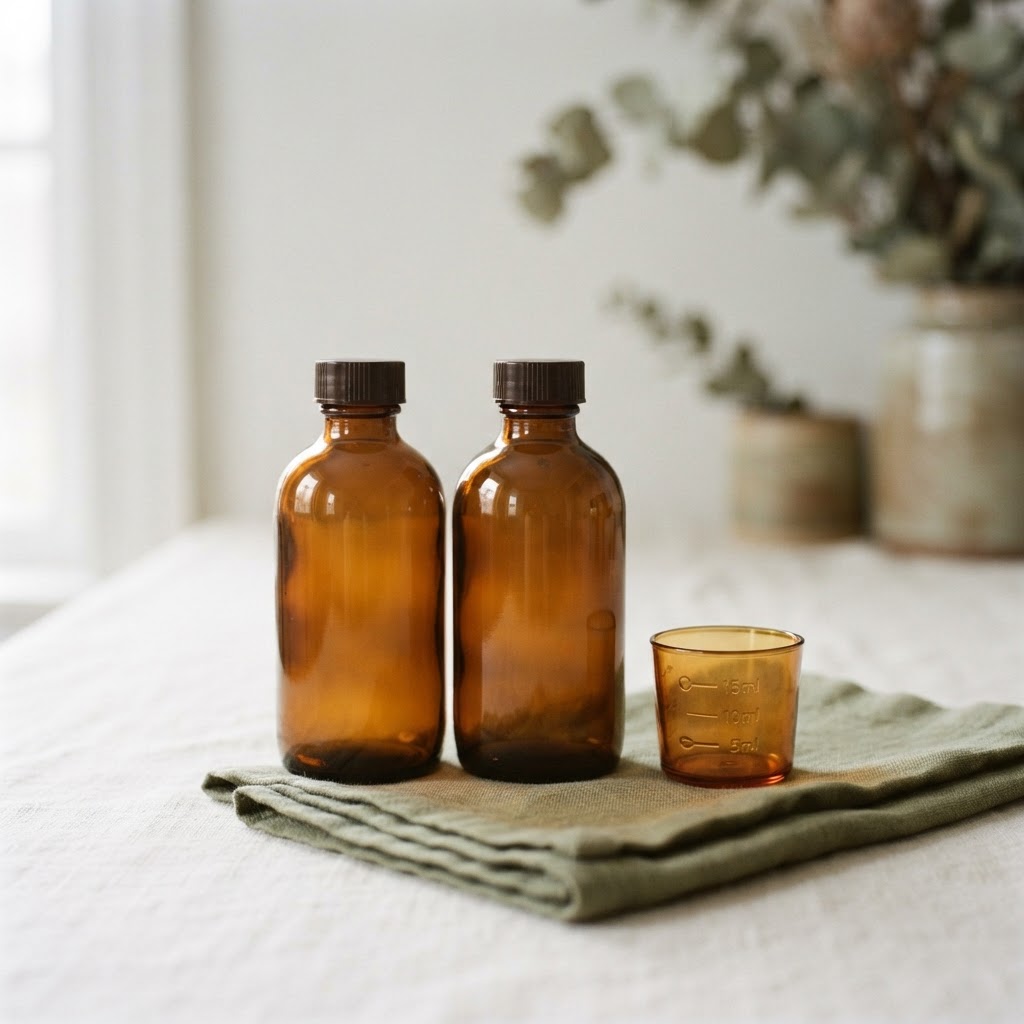
A child has a stuffy nose, a cough, and a restless night. Two bottles promise relief, but their front labels do not tell you whether they contain the same medicine. Before combining products, check the active ingredients and whether either product is appropriate for your child's age.[1] This is especially important when different caregivers are helping. "I gave the nighttime one" is not enough information for the next person to decide what can be given safely.
Age guidance comes before choosing a dose
FDA does not recommend over-the-counter cough and cold medicines for children younger than two because serious side effects can occur. Manufacturers label these products not to use in children younger than four. The American Academy of Pediatrics advises that children ages four through six use cough medicine only when their doctor recommends it.[1,2] These statements concern cough and cold medicines; they are not a dosing guide for every pediatric medicine. Do not give an adult cold preparation in a smaller estimated amount. If the label excludes your child's age, ask the pediatrician what to do instead.[1]
Compare the active-ingredient panels
The Drug Facts panel identifies active ingredients, their purposes, warnings, and directions. The brand name or a word such as "multi-symptom" is not an adequate substitute for reading those fields.[3] Combination products may repeat an ingredient already given in another medicine. FDA warns that using more than one product with the same drug can cause an accidental overdose.[1] A practical comparison is to place the packages side by side and read the active-ingredient names aloud. Then check the amounts and the warnings. If anything is unclear, show both labels to a pharmacist before giving another product. Do not assume that daytime and nighttime products are designed to be combined with any other medicine in the cabinet.
Make the handoff between caregivers specific
Write down the exact product, amount given, and time. Keep the original package and its dosing device together. Before the next dose, the next caregiver should know what was actually administered, rather than what someone intended to give. This simple handoff also helps when calling a clinician. "This bottle, this amount, at this time" allows a more useful conversation than "a little cold medicine earlier." If you suspect an extra dose or accidental ingestion, seek poison-control or medical advice promptly rather than waiting for symptoms.
Ask about comfort measures, too
The AAP describes options such as nasal saline and, for children at least one year old, honey for cough. Honey should not be given to infants younger than one. The appropriate approach depends on the child's age and symptoms.[2] Ask the pediatrician what symptoms should prompt a call or urgent evaluation. A medicine label cannot determine why a child is coughing or whether an illness needs assessment. If a child has a prescribed medicine that is difficult to administer, see Sierra's pediatric compounding information. A formulation discussion is separate from deciding whether a cough or cold medicine is appropriate; compounding does not remove age-related safety concerns. This article offers general medication-safety education, not a pediatric dosing plan.
References
- 1. U.S. Food and Drug Administration. Should You Give Kids Medicine for Coughs and Colds? https://www.fda.gov/consumers/consumer-updates/should-you-give-kids-medicine-coughs-and-colds
- 2. American Academy of Pediatrics, HealthyChildren.org. Coughs and Colds: Medicines or Home Remedies? https://www.healthychildren.org/English/health-issues/conditions/chest-lungs/Pages/Coughs-and-Colds-Medicines-or-Home-Remedies.aspx
- 3. U.S. Food and Drug Administration. The Over-the-Counter Drug Facts Label. https://www.fda.gov/drugs/understanding-over-counter-medicines/over-counter-drug-facts-label
- Sources accessed October 29, 2026. Access date is not a source publication date.
Sierra Compounding Pharmacy Can Help
All compounded medications require a valid prescription from a licensed healthcare provider. If your provider has determined that a customized compounded formulation is appropriate for your needs, Sierra Compounding Pharmacy — located in Rancho Cucamonga — is here to help. We serve patients throughout the Inland Empire, including San Bernardino County, Riverside County, and surrounding communities.
Related Education Articles

Measuring Liquid Medicine: Read the Label, Then Match the Tool
Understand liquid medication labels, concentration changes, and oral syringes so you can ask the right questions before measuring a dose at home.

When a Child Has Trouble Swallowing Pills
Questions to ask when a child has trouble taking pills, including prescription liquids, ingredients and pharmacist instructions.
Questions About Compounded Medications?
Sierra Compounding Pharmacy serves patients and providers throughout the Inland Empire. Contact us or ask your provider to send a prescription directly.