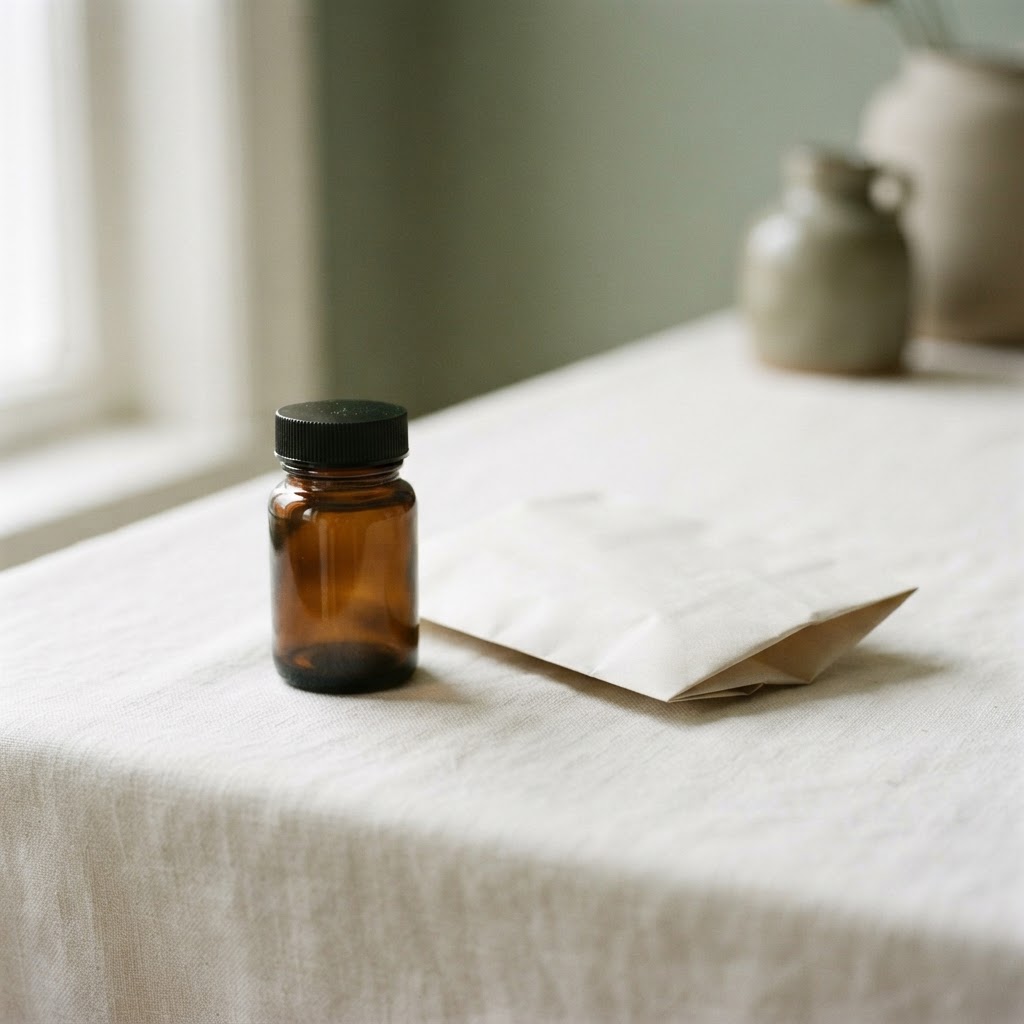
What Should You Do With Leftover or Expired Compounded Medicine?
Learn how to ask about safe disposal of leftover compounded medicine, check take-back options, and avoid assuming every medication can be flushed.
A treatment changes, a container reaches its beyond-use date, or a partly used prescription is left in a drawer. Disposing of it may feel less urgent than getting the next refill, but keeping unwanted medicine accessible creates an avoidable household risk. FDA recommends take-back options for most unused or expired medicines.[1] For a compounded preparation, the ingredients and dosage form help determine the appropriate disposal instructions. A cream, capsule, liquid, or other preparation should not be discarded based only on what you did with a different medicine.
Confirm what you are no longer supposed to use
Before disposing of anything, separate medicines that are clearly unwanted from prescriptions whose treatment status is uncertain. If you do not know whether a clinician intended you to stop a medicine, ask. Cleaning out a cabinet should not accidentally become a change in treatment. Keep the original label available while you resolve questions. The pharmacy may need the prescription number and ingredient information to identify a compounded preparation accurately. Photographing the label can help you retain that information while arranging disposal. Until you have a plan, store the medicine securely out of children's reach and away from pets. Do not leave it on a counter or in an open bag as a reminder to deal with it later.[1,2]
Check a take-back location before making the trip
Take-back programs may use collection kiosks or mail-back options. FDA provides information on finding authorized collection locations.[1] Acceptance rules can differ, so check with the specific program before bringing liquids, creams, or other unusual containers. Ask practical questions: Does the program accept this dosage form? Should it stay in its original container? Are there packaging requirements? What hours is the collection point accessible? These details can save a wasted trip and keep the medicine contained during transport. Do not assume that every pharmacy accepts returns or operates a disposal kiosk. Call first, including if you plan to visit Sierra.
Flushing is a limited exception
FDA's advice is not to flush medicines routinely. When take-back or mail-back options are not readily available, certain medicines on FDA's flush list have specific disposal recommendations because of their serious exposure risks.[1] For a compounded medicine, ask the pharmacist to check the ingredients and applicable instructions rather than guessing from the prescription's general purpose. If it is not a flush-list medicine, other disposal guidance may apply. FDA also provides household-trash instructions for certain medicines when take-back options are unavailable; confirm that this is appropriate for your preparation.[1] Do not pour a leftover liquid down the sink merely because it mixes with water. The physical form alone does not determine the disposal method.
Treat used sharps as a separate question
Needles and other sharps require their own disposal process. FDA advises putting used sharps into an appropriate sharps container promptly and following local disposal requirements.[3] A medicine take-back bin should not be assumed to accept them. When arranging disposal, identify both the medicine and any device or sharp involved. Ask separately about each item if necessary. For help identifying a Sierra-dispensed preparation and the questions to ask a collection program, contact Sierra Compounding Pharmacy. This does not mean Sierra operates a take-back site; confirm available options before traveling.
This article provides general disposal education. Follow product-specific and local disposal instructions.
References
- 1. U.S. Food and Drug Administration. Disposal of Unused Medicines: What You Should Know. https://www.fda.gov/drugs/safe-disposal-medicines/disposal-unused-medicines-what-you-should-know
- 2. U.S. Food and Drug Administration. Properly Store Medications to Keep Your Pet Safe. https://www.fda.gov/animal-veterinary/animal-health-literacy/properly-store-medications-keep-your-pet-safe
- 3. U.S. Food and Drug Administration. Best Way to Get Rid of Used Needles and Other Sharps. https://www.fda.gov/medical-devices/safely-using-sharps-needles-and-syringes-home-work-and-travel/best-way-get-rid-used-needles-and-other-sharps
- Sources accessed October 8, 2026. Access date is not a source publication date.
Sierra Compounding Pharmacy Can Help
All compounded medications require a valid prescription from a licensed healthcare provider. If your provider has determined that a customized compounded formulation is appropriate for your needs, Sierra Compounding Pharmacy — located in Rancho Cucamonga — is here to help. We serve patients throughout the Inland Empire, including San Bernardino County, Riverside County, and surrounding communities.
Related Education Articles

Understanding Compounding: Basics Every Patient Should Know
Discover the basics of pharmacy compounding, its benefits, and how it offers personalized medication solutions.
Medicine Left in a Hot Car? What to Tell Your Pharmacist
Learn what information to gather after medicine is exposed to heat, why storage instructions matter, and how to ask about replacement and next doses.
Questions About Compounded Medications?
Sierra Compounding Pharmacy serves patients and providers throughout the Inland Empire. Contact us or ask your provider to send a prescription directly.