Eczema Moisturizers: Choosing a Cream or Ointment That Fits Your Routine
Learn what to look for in an eczema moisturizer, how it fits alongside prescription treatment, and which product questions to bring to your dermatologist.
A moisturizer can seem like the least complicated part of eczema care until you face a shelf full of products. One promises a "barrier boost," another says "sensitive," and a third feels too greasy to use before getting dressed. For people with diagnosed atopic dermatitis, choosing a moisturizer is about finding a suitable product and a routine they can follow. It is also important to understand what moisturizer can do and when prescription treatment has a separate role.
Start with the formulation, not the marketing language
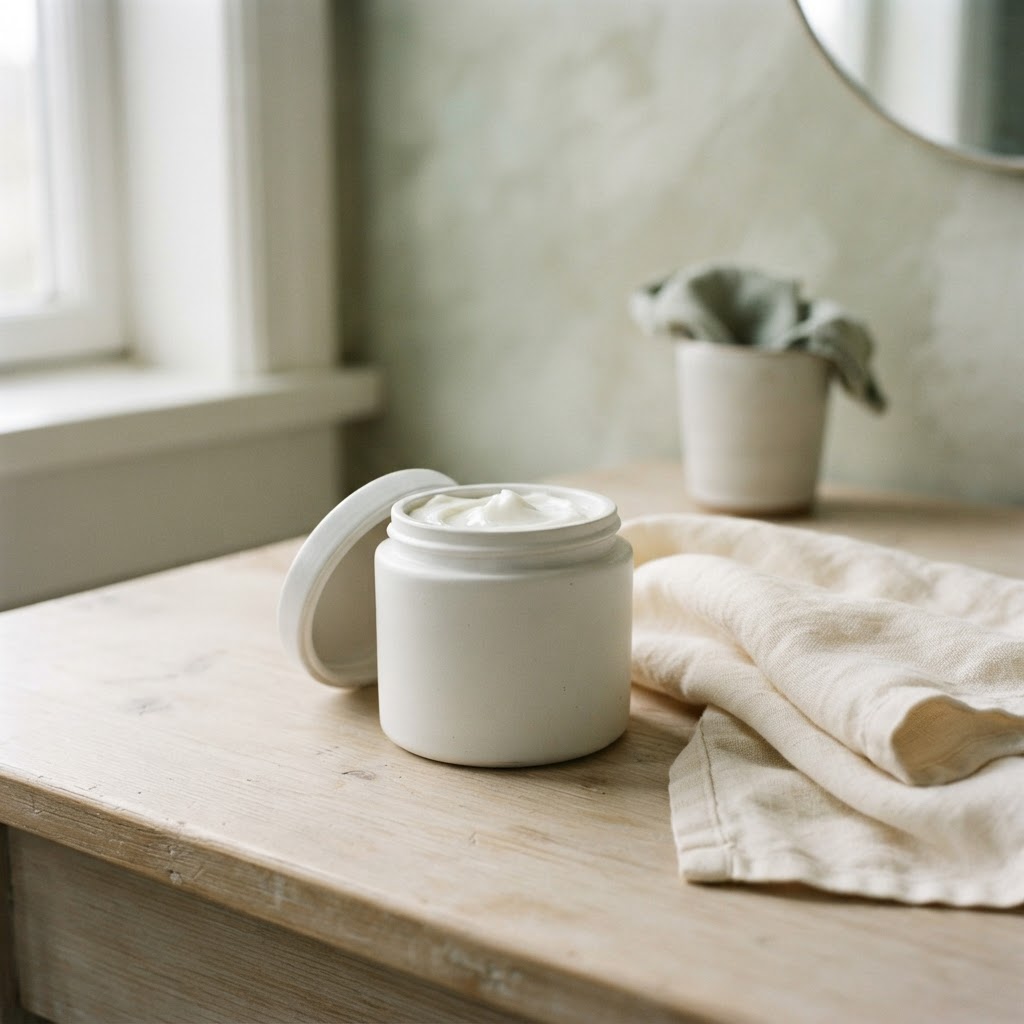
The American Academy of Dermatology recommends a fragrance-free cream or ointment rather than a lotion for eczema-prone skin. These thicker options help keep skin hydrated. Applying moisturizer after bathing, while the skin remains damp, can help retain moisture.[1] The practical choice still needs to work for your day. Tell your dermatologist if the texture keeps you from using the product or if it stings. A product left unopened because it feels uncomfortable is a useful problem to discuss, not a reason to abandon the whole treatment plan. Bring the package or a clear photograph of the ingredient list. Descriptions such as "the white tub" are difficult to compare, especially when one brand sells several formulas.
Give moisturizer a defined place in the plan
Eczema can allow moisture to escape from the skin more readily. AAD describes gentle, fragrance-free moisturizer as an important part of caring for dry, itchy skin and recommends use as often as your dermatologist advises.[2] Ask for a routine that answers ordinary questions: When should I apply it? Which areas need it? How should I use it alongside the prescribed medicine? If you have more than one topical product, ask the clinician or pharmacist to write out the order rather than guessing. A simple plan might be organized around bathing, dressing, and bedtime, but the actual schedule should reflect your treatment instructions. The point is to make the plan understandable, not to add unnecessary steps.
Moisturizer and medication have different jobs
Dermatologists may use prescription treatments to control inflammation and other features of atopic dermatitis. Moisturizing remains part of care, but it does not automatically replace treatment for an active flare.[3] Conversely, a prescription cream should not be treated like an ordinary all-over moisturizer. Ask where to use it, for how long, and what to do when the flare improves. Follow its instructions even if another product in your bathroom looks similar. If symptoms are not improving, describe what you actually used and how often. That gives the clinician a better basis for adjusting care than simply labeling the whole routine a failure.
Make the next visit more useful
Write down a few questions before you go:
- Is this moisturizer appropriate for my diagnosed skin condition?
- What should I do if it causes stinging or new irritation?
- How do I combine it with my prescription products?
- Which changes mean I should contact you before my scheduled follow-up?
For prescription formulation questions, visit Sierra's Dermatology Compounding service page. A change in formulation should address a specific need and be coordinated with the prescriber; eczema does not by itself establish a need for compounding. This article provides general education for diagnosed eczema. A new or unexplained rash needs an appropriate clinical assessment.
References
- 1. American Academy of Dermatology. How to treat eczema at home. https://www.aad.org/news/how-to-treat-eczema-at-home
- 2. Ludmann P. How to reduce eczema flares with moisturizer. American Academy of Dermatology. https://www.aad.org/public/diseases/eczema/insider/moisturizer-reduce-flares
- 3. American Academy of Dermatology. Eczema types: Atopic dermatitis diagnosis and treatment. https://www.aad.org/public/diseases/eczema/types/atopic-dermatitis/treatment
- Sources accessed October 8, 2026. Access date is not a source publication date.
Sierra Compounding Pharmacy Can Help
All compounded medications require a valid prescription from a licensed healthcare provider. If your provider has determined that a customized compounded formulation is appropriate for your needs, Sierra Compounding Pharmacy — located in Rancho Cucamonga — is here to help. We serve patients throughout the Inland Empire, including San Bernardino County, Riverside County, and surrounding communities.
Related Education Articles

How to Keep a Rosacea Trigger Diary Without Overcomplicating Your Routine
Learn how to track possible rosacea triggers, spot patterns without blaming every flare on food, and bring a useful record to your dermatologist.

Custom Dermatology Compounding: What Patients Should Know
How personalized topical formulations may support dermatology and aesthetic prescription needs.
Questions About Compounded Medications?
Sierra Compounding Pharmacy serves patients and providers throughout the Inland Empire. Contact us or ask your provider to send a prescription directly.