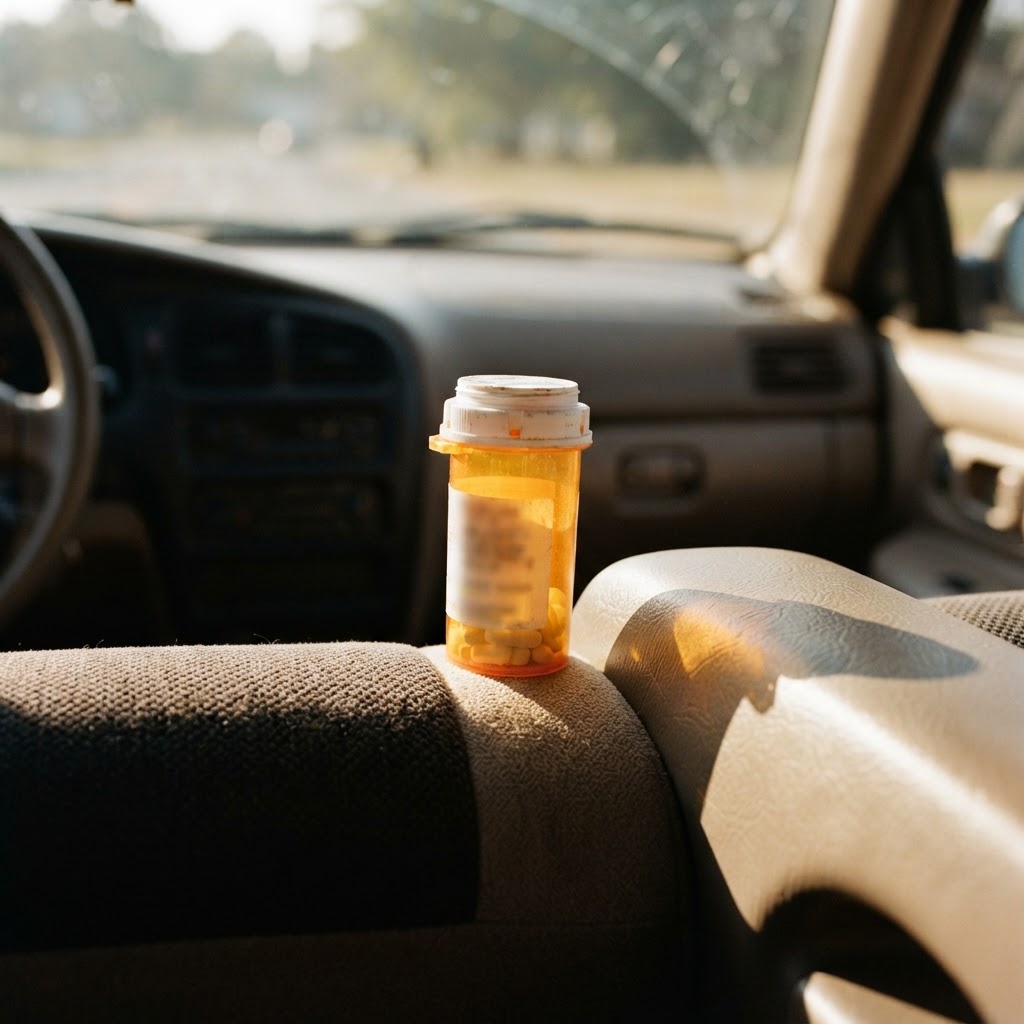
Medicine Left in a Hot Car? What to Tell Your Pharmacist
Learn what information to gather after medicine is exposed to heat, why storage instructions matter, and how to ask about replacement and next doses.
You pick up a prescription, stop for another errand, and later realize the bag stayed in the car. The bottle may look unchanged, but that does not answer the question you actually need resolved: Is this particular medicine still suitable to use? There is no single safe number of hours that applies to every medication in every hot car. The useful next step is to gather the details and contact the dispensing pharmacist for product-specific guidance.
Start with the actual storage instructions
Heat, moisture, and light can damage medicines. MedlinePlus advises following storage instructions, keeping medicines away from hot places, and avoiding common problem locations such as a car or a steamy bathroom.[1] Read the current container rather than relying on how you stored a previous prescription. Note whether it calls for refrigeration or another specific condition. A compounded preparation needs guidance for that exact formulation; directions for a different cream or liquid should not be assumed to apply. Do not decide that placing an exposed product in a refrigerator will resolve the question. Instead, ask the pharmacist what to do with the container while its suitability is being assessed.
Prepare a brief account of the exposure
Have the label available when you call. Useful details include:
- The medication name, strength, dosage form, and prescription number.
- Where it was left, such as the passenger seat, trunk, or a bag indoors.
- Approximately when it was placed there and when you found it.
- Whether you know the temperature or are only estimating.
- Any leakage, melting, separation, discoloration, or other visible change.
💡 An honest estimate is more useful than a precise number you cannot verify. You can say, "It was probably between noon and three, but I am not certain." That lets the pharmacist understand the limits of the information.
Discuss the next dose as well as the bottle
FDA advises people whose temperature-sensitive medicines were not stored as recommended during an outage to consult a pharmacist, health professional, or manufacturer about whether they can still be used.[2] The same need for product-specific assessment matters when you are uncertain about an accidental exposure. Explain when the next dose is due and whether you have another properly stored supply. Ask for a plan that addresses both the questionable medicine and continuity of treatment. Do not independently double a later dose to compensate for a missed one or stop a time-sensitive treatment without promptly seeking guidance. If the medicine is essential and you cannot reach the dispensing pharmacy, contact your prescriber or an appropriate urgent medical service for advice about the interruption.
Plan for the situations you are likely to face
At your next pickup, ask how to transport the prescription and what to do during a power outage. FDA recommends planning ahead for medicines that require refrigeration and following the labeled storage requirements.[2] A short written instruction is useful: the required storage conditions, whom to call after an exposure, and what information they will need. Keep it with the prescription information rather than trying to reconstruct it during a problem. For questions about a prescription dispensed by Sierra, contact the pharmacy with the label and exposure details. Suitability cannot be confirmed from this article or from appearance alone.
This article provides general storage education, not permission to use a medicine that may have been damaged.
References
- 1. MedlinePlus Medical Encyclopedia. Storing your medicines. https://medlineplus.gov/ency/patientinstructions/000534.htm
- 2. U.S. Food and Drug Administration. Safe Drug Use After a Natural Disaster. https://www.fda.gov/drugs/emergency-preparedness-drugs/safe-drug-use-after-natural-disaster
- Sources accessed October 8, 2026. Access date is not a source publication date.
Sierra Compounding Pharmacy Can Help
All compounded medications require a valid prescription from a licensed healthcare provider. If your provider has determined that a customized compounded formulation is appropriate for your needs, Sierra Compounding Pharmacy — located in Rancho Cucamonga — is here to help. We serve patients throughout the Inland Empire, including San Bernardino County, Riverside County, and surrounding communities.
Related Education Articles
Measuring Liquid Medicine: Read the Label, Then Match the Tool
Understand liquid medication labels, concentration changes, and oral syringes so you can ask the right questions before measuring a dose at home.

What Does the Beyond-Use Date on Your Compounded Medicine Mean?
Understand a compounded medicine's beyond-use date, why storage instructions matter, and what to ask before using medicine left from an earlier fill.
Questions About Compounded Medications?
Sierra Compounding Pharmacy serves patients and providers throughout the Inland Empire. Contact us or ask your provider to send a prescription directly.